


IUCN’s “Towards Pro-Poor REDD+” project in Uganda has produced a study on REDD+ benefit sharing that provides concrete recommendations to guide Uganda, as well as other developing countries, when designing and implementing REDD+ strategies.
REDD+ resources
Reducing Emissions from Deforestation and Degradation plus Sustainable Forest Management
(REDD + SFM)
Sustainable Forest Management (SFM) is seen to be a key factor to REDD+►►
Definition of SFM by UN + FAO: A/RES/62/98►► Definition of SFM by UNFF: Sustainable forest management as a dynamic and evolving concept aims to maintain and enhance the economic, social and environmental value of all types of forests, for the benefit of present and future generations►► Definition of SFM by CIFOR: Managing (permanent) forest to achieve one or more clearly specified objectives of management with regard to the production of a continuous flow of desired forest products and services (e.g. carbon) without undue reduction of its inherent values and future productivity and without undue undesirable effects on the physical and social environment►► |
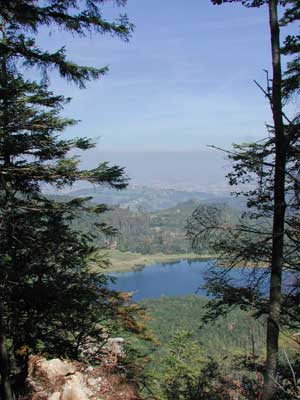 |
SFM, according to internationally agreed language, is a dynamic and evolving concept that aims to maintain and enhance the economic, social and environmental value of all types of forests, for the benefit of future generations.
Want to read more about Sustainable Forest Management? Follow this link►
REDD+ Governance
 At national, regional and local level as well as for state owned and private owned land and forests
EnvrioScope |
10 years 12 months ago
April, 2013. Scheyvens, Henry; Sagara, Miho and Ibarra Gené, Enrique. Institute for Global Environmental Strategies (IGES), Japan. 133 pages. ISBN: 978‐4‐88788‐133‐4
FERN, World Growth |
11 years 2 months ago
Ten years since the EU Forest Law Enforcement Governance and Trade Action Plan was launched, and one month before the introduction of the EU Timber Regulation which makes it a criminal offence to put illegally sourced timber on the EU market, new research by FERN has shown strong forest governance...
Ghana Business |
11 years 4 months ago
The Cabinet of the Ghana government has approved a revised forest and wildlife policy to enable the country to consolidate and maximise benefits derived from products and services of the forest and wildlife sector. The revised 2011 Forest and Wildlife Policy highlights a radical paradigm shift in...
Pages
REDD+ Capacity building
 At all stages from indigenous people, local communities to individual forest owners
FAO |
12 years 2 weeks ago
National and international focus on forests and forestry has grown rapidly in recent times. New factors are coming into play and an increased understanding of forest-related processes and how to manage them for the greatest benefit is required. Improved performance at all levels will be necessary...
The EasAfrican |
12 years 3 months ago
A new insurance product has been launched to cover private equity fund investments in Africa and other emerging markets against political risk. The political risk insurance has been developed by Overseas Private Investment Company (OPIC), the US government’s development finance institution. It...
PHE Ethopia |
12 years 9 months ago
By 2025, children who are 18 years or younger today will represent more than half of the world‘s workforce. A critical strategic opportunity exists to ‗insure‘ the resiliency, effectiveness, and overall return on investment on 20-30 year REDD projects by investing in innovative school-based...
NC Guyana |
12 years 10 months ago
Guyana's President Bharrat Jagdeo spent today in a series of meetings with German leaders and senior officials. Discussions centered on the need for sustained political action on climate change, and in particular on Guyana and Germany's upcoming joint chairing of the Interim REDD+ Partnership...
Pages
REDD+ Technical Support
 From national carbon inventory to national land use planning...
CIFOR |
12 years 2 weeks ago
The international community needs to help developing countries increase their ability to measure and monitor the amount of greenhouse gas emissions that they save by safeguarding their forests if a UN-backed climate change mechanism known as REDD+ is to attain its objective of cutting emissions,...
ForestCarbon Portal |
12 years 5 months ago
Meridian Institute This report proposes guidelines for developing REDD+ reference levels (RLs) under the United Nations Framework Convention on Climate Change (UNFCCC). It identifies principles that should be adhered to, the steps that must be taken, the data that will be required, and shows how...
Forest Trends |
12 years 9 months ago
Forest projects around the world are working to confront the practical challenges of reducing emissions and providing local benefits. To facilitate the development of forest projects, we have compiled strategic step-by–step guidance to emerging best practices.
Guyana Chronicle |
12 years 11 months ago
AS Guyana’s Low Carbon Development Strategy moves beyond its start-up phase, the government is leading efforts to advance work on the six priority investments for this year. The six investments will accelerate Guyana’s transition to a low carbon economy by deploying the US$70M earned by Guyana...